

TMS vs Ketamine vs Spravato: How to Choose


By team • October 20, 2026

 Quick Answer: All three treat depression that hasn't responded to medication, and they work in completely different ways. TMS uses magnetic pulses, involves no drug, and runs as a course of sessions. Spravato is a nasal spray given in the office and covered by several insurers. Ketamine works fastest but is self-pay everywhere and used off-label. The right one depends on your medical history, how quickly you need relief, what your schedule allows, and what your insurance covers.

If medication hasn't worked, you've probably come across all three names and found it hard to tell them apart. They get grouped together because they're all used for treatment-resistant depression, but the day-to-day experience of each is very different.

The Short Version

 TMS uses magnetic pulses rather than medication. It's FDA-approved for depression and OCD, improvement is gradual over a course of sessions, and you can drive yourself home. It's in network with several insurance plans.

Spravato is an esketamine nasal spray, FDA-approved for treatment-resistant depression and given in the office under supervision. Many people respond within weeks. You can't drive afterward. It's in network with several insurance plans.

Ketamine is used off-label for depression and acts fastest, sometimes within hours or days. It's given in the office, you can't drive afterward, and it isn't covered by any insurer.

TMS: No Medication, No Drowsiness

Transcranial magnetic stimulation delivers magnetic pulses to the area of the brain involved in mood regulation. You sit in a chair, fully awake, and feel a tapping sensation on your scalp.

Because nothing enters your bloodstream, TMS avoids the side effects that make people give up on antidepressants. There's no sedation, no monitoring period, and no restriction on driving. You come in, have your session, and carry on with your day.

The trade-off is time. The standard course runs daily over six to eight weeks, which is a real commitment. Accelerated schedules compress the same course into five days or two days for people who can't do daily appointments or who travel in from outside Denver.

The most common side effects are scalp discomfort and mild headache in the first week. TMS isn't suitable if you have metal implants in or near your head, and a history of seizures needs careful review.

Spravato: Covered, Supervised, In the Office

Spravato is esketamine, delivered as a nasal spray. It's FDA-approved specifically for treatment-resistant depression, and it's given in the office under supervision rather than taken at home.

You self-administer the spray while a clinician is present, then stay to be monitored afterward, so plan for the appointment to take a couple of hours. You can't drive for the rest of the day, so you'll need someone to take you home.

Appointments are frequent at first and become less so over time, following the schedule your psychiatrist sets. Because Spravato holds FDA approval for this use, it's covered by a number of insurance plans, which often makes it the most affordable of the three.

Ketamine: Fastest, but Self-Pay

Ketamine has been used as an anesthetic for decades. At much lower doses it's used off-label for depression, and it's associated with the fastest response of the three. Some people notice a change within hours or days rather than weeks.

As with Spravato, you're monitored in the office and can't drive afterward. We also offer ketamine-assisted therapy, where a therapist is in the room during treatment to help you work with what comes up. That option doesn't exist with the other two.

The limitation is cost. Ketamine is not covered by any insurer, anywhere, so it's self-pay by definition rather than by choice.

Not sure what the right next step is?

Every patient starts with a full evaluation with one of our board-certified psychiatrists. We look at what you’ve already tried and what makes sense now.

The Questions That Actually Decide It

Most people find the decision gets much easier once they answer these.

Do you want to avoid medication altogether? That points to TMS. It's the only one of the three with no drug involved.

How quickly do you need to feel different? Ketamine is fastest, Spravato next, TMS most gradual. If the situation is urgent, that ordering matters a great deal. If it isn't, it matters less than the other factors.

What does your schedule allow? Daily appointments for two months is impossible for some people and perfectly manageable for others. If it's impossible, accelerated TMS or one of the medication options fits better.

Can you arrange rides? Spravato and ketamine both rule out driving on treatment days. TMS doesn't.

What's covered? TMS and Spravato are both in network with several insurers here. Ketamine isn't covered anywhere. For many people this is the deciding factor, and there's nothing wrong with that.

What Rules Each One Out

  • TMS: metal implants or devices in or near the head. Dental fillings and braces are fine. A seizure history needs review.
  • Spravato and ketamine: uncontrolled high blood pressure, certain heart conditions, a history of psychosis, current pregnancy, or unaddressed substance misuse.

These are reviewed properly during your evaluation rather than guessed at from a list.

How the Decision Gets Made Here

You don't choose between these on your own, and you shouldn't have to. Every option starts with a comprehensive psychiatric evaluation: what you've tried, how it went, your medical history, and what you actually need from treatment.

What matters is that the recommendation isn't shaped by what the clinic happens to own. TMS, Spravato, ketamine, medication management, and therapy are all provided here by the same psychiatrists, so the answer can be "none of these three yet, let's revisit your medication first" when that's the honest one.

We verify your insurance benefits before your first visit, so cost is a known quantity rather than a surprise.

Frequently Asked Questions

Can I have more than one of these?

Sometimes. They're not mutually exclusive, and some people move from one to another over time. Your psychiatrist will advise on sequencing.

Is Spravato just ketamine with better insurance coverage?

Not quite. Esketamine is a closely related compound, given differently and approved specifically for treatment-resistant depression. The coverage difference follows from that approval.

Will I have to stop my antidepressant?

Usually not. All three are often used alongside existing medication. Your psychiatrist will review what you're taking.

Which one works best?

There's no single answer, which is the honest response rather than an evasive one. Response varies between individuals, and the best choice depends on your history and circumstances rather than a ranking.

What if the one I choose doesn't help?

You switch. Because everything is offered here, changing direction means a conversation, not starting again somewhere new.

How do I find out what I'd pay?

Ask us to verify your benefits before your first visit. For TMS, ketamine, or Spravato, you can also book a free 10-minute call with one of our physicians.

Latest Posts

Four people outdoors on a path, with a woman in a red-and-white striped top smiling in the foreground.
By team • October 20, 2026
Consider a psychiatric evaluation when attention or impulsivity problems show up in more than one setting, have been going on for months rather than weeks, a...

Two people seated and talking in a bright room, gesturing during a discussion
By Charles Shuman • October 12, 2026
If two or more antidepressants haven't helped enough, that's called treatment-resistant depression, and it's common. The next step isn't necessarily another...

Two people talking in a cozy room by a bright window, seated in chairs and holding hands
By Charles Shuman • September 24, 2026
Clear self-pay pricing for psychiatry in Denver: evaluations, follow-ups, ketamine, and TMS, plus ho

Smiling girl in white top standing on a path, with two people blurred in the background outdoors
By Charles Shuman • September 23, 2026
How to choose a child and adolescent psychiatrist in Denver: what the training means, when to seek one, what the first appointment involves, and what it costs.
Clinician fitting a protective dental cap on a smiling patient in a modern exam room
By Charles Shuman • September 23, 2026
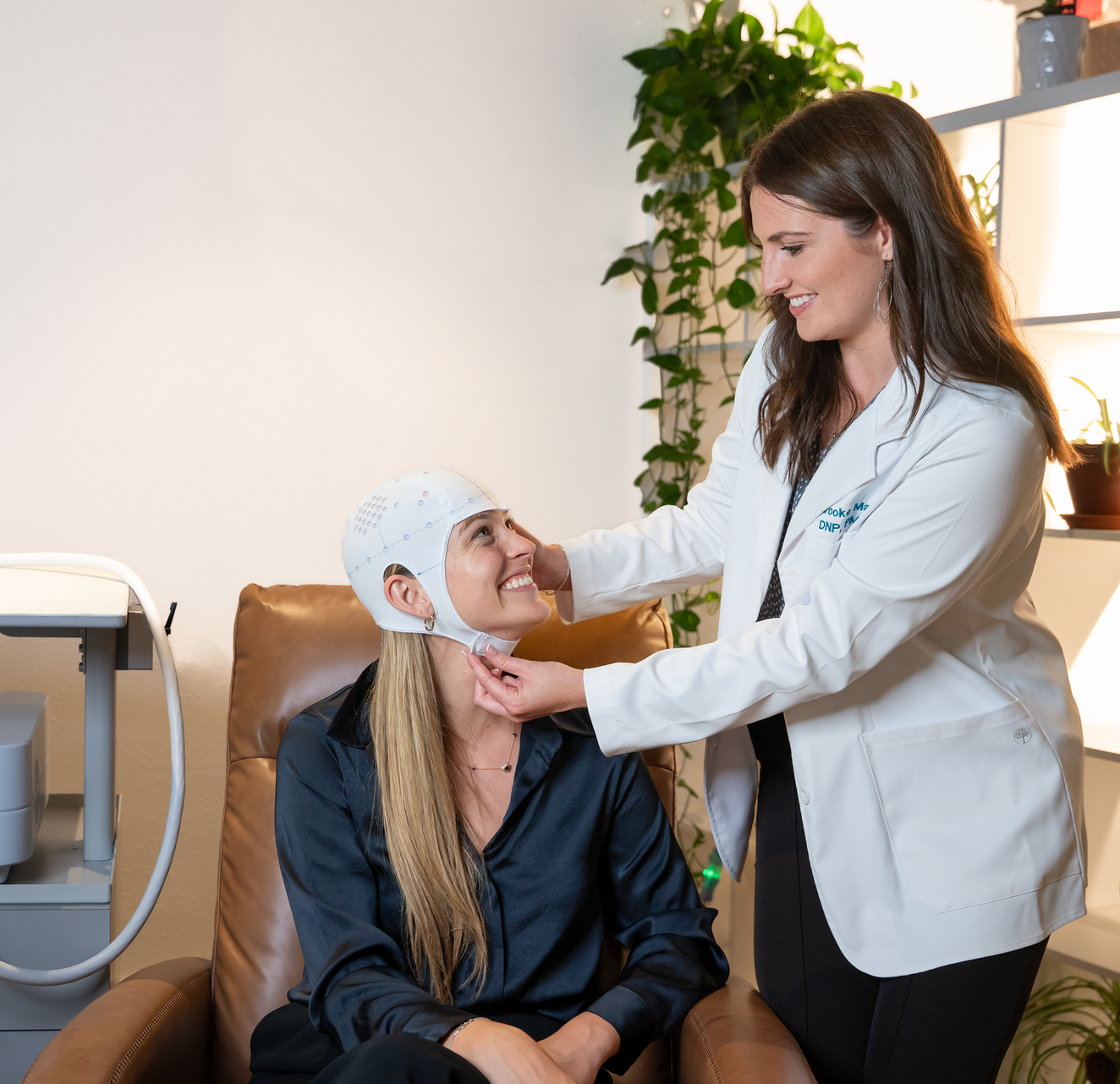
TMS for depression, explained: no medication, no anesthesia, and you drive yourself home. See who it helps and what it costs in Denver.

Person sitting by a window, holding a mug and looking outside at a mountain view.
By Charles Shuman • September 22, 2026
What ketamine-assisted therapy actually involves at our Denver office, from the first call to after your session, written by board-certified psychiatrists.