TMS for Depression: What to Expect and Who It Helps
By Charles Shuman • September 23, 2026
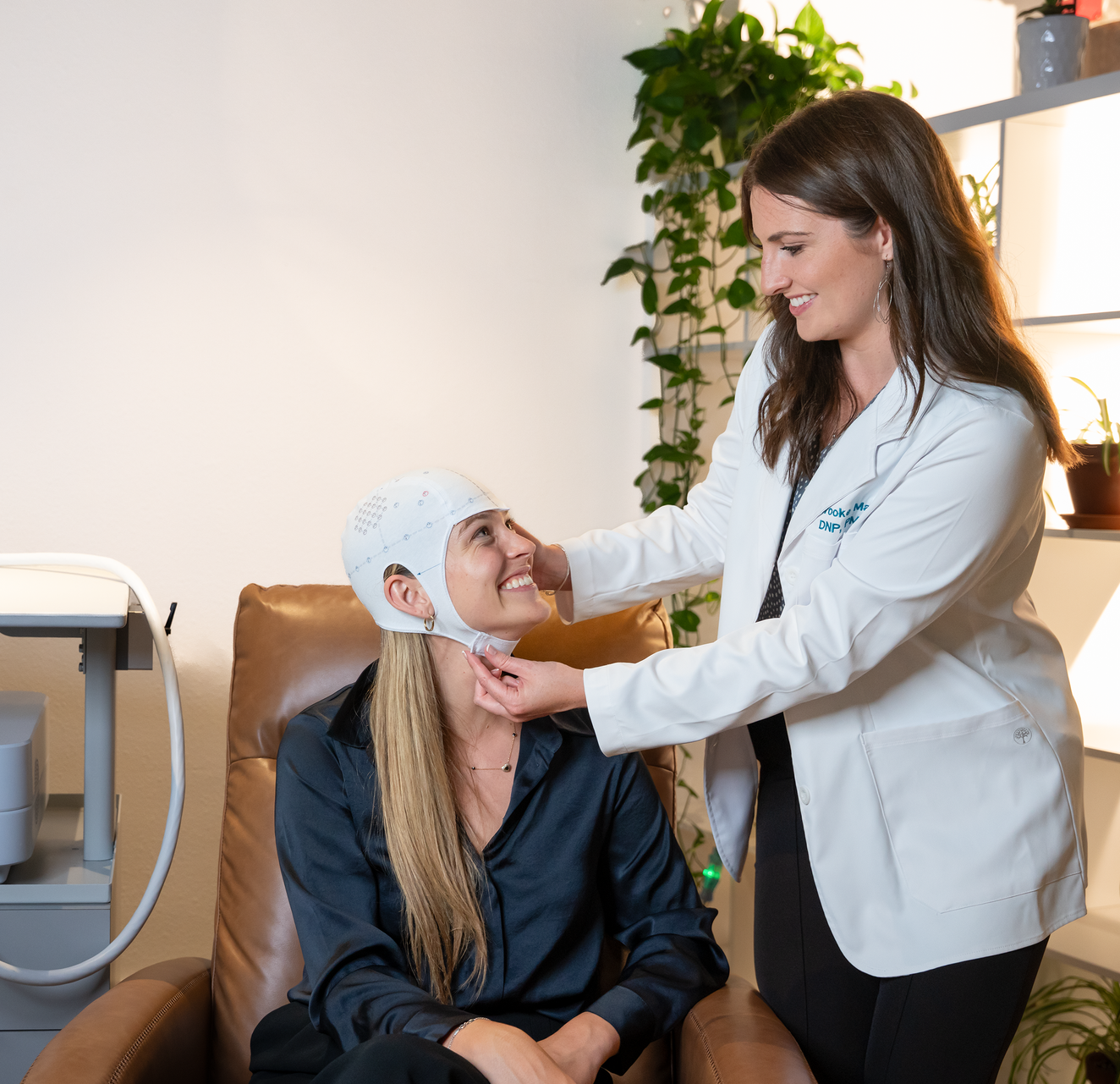
Quick Answer: TMS (transcranial magnetic stimulation) uses magnetic pulses to stimulate the part of the brain involved in mood regulation. It's FDA-approved for depression and OCD, involves no medication and no anesthesia, and you stay awake and drive yourself home afterward.
If antidepressants haven't worked for you, or the side effects made them not worth it, TMS is usually the next option a psychiatrist raises. It's been available for years, but most people know little about it beyond the name. Here's what it involves.
What Is TMS?
TMS stands for transcranial magnetic stimulation. A coil is placed against your scalp and delivers magnetic pulses to a specific area of the brain involved in regulating mood. The pulses are similar in strength to those used in an MRI scan.
It isn't a medication, so it doesn't circulate through your body. That's why TMS avoids the side effects people most often quit antidepressants over: weight gain, sexual side effects, and feeling emotionally flat.
TMS is FDA-approved for depression and OCD. You stay fully awake; there's no anesthesia and no sedation, and you can drive yourself home and go back to work straight afterward.
Who Does TMS Help?
TMS is mainly used for adults with treatment-resistant depression, which means depression that hasn't improved enough after trying antidepressants. It's also used for OCD.
It's often a good fit if:
- You've tried one or more antidepressants without enough benefit
- Medication side effects have been hard to tolerate
- You want a treatment that doesn't involve daily medication
- You can commit to attending appointments on a set schedule
TMS isn't suitable for everyone. It may not be an option if you have metal implants or devices in or near your head, such as aneurysm clips or cochlear implants. Dental fillings and braces are fine. A history of seizures also needs careful review, because seizure is a rare risk with TMS.
Your psychiatrist will work through all of this during your evaluation.
What Happens Before You Start
A comprehensive psychiatric evaluation. Every patient has a full evaluation with a psychiatrist before starting. We'll go through your symptoms, the treatments you've already tried, your medical history, and anything that would rule TMS out. This is also where we decide whether a standard or accelerated course suits you better.
Your first session includes mapping. Before treatment begins, your psychiatrist finds the right spot on your scalp and works out the right level of stimulation for you. This is personalized to you, not a standard setting, and it's what the rest of your sessions are based on.
Not sure if TMS could work for you?
Book with one of our physicians. Ask your questions and find out whether an evaluation makes sense before you commit to anything.
What a Session Feels Like
You sit in a chair, awake, in your normal clothes. The coil rests against your head, and you'll hear a clicking sound and feel a tapping sensation on your scalp while the pulses are delivered.
Most people describe it as odd at first rather than painful. Scalp discomfort and mild headache are the most common side effects, and they usually settle within the first week as you get used to it. You can read, listen to music, or talk to the technician during treatment.
Session length depends on the protocol your psychiatrist recommends, and they'll tell you what to expect at your evaluation. Afterward you get up and carry on with your day. There's no recovery time and no restriction on driving.
How Long Does a Course Take?
At Confluence, there are three options:
- Standard TMS. 36 sessions, one a day over six to eight weeks.
- Accelerated TMS, five days. 50 sessions delivered across a single treatment week.
- Accelerated TMS, two days. 20 sessions across two days.
Accelerated schedules suit people who can't commit to daily appointments for two months, or who travel in from outside Denver. Standard TMS spreads the same course over a longer period and is easier to fit around a regular work schedule.
Improvement is usually gradual rather than sudden. Many people notice change partway through a course, and some notice it after the course has finished. Individual responses vary, and TMS doesn't work for everyone.
What Does TMS Cost in Denver?
Every option here is an all-inclusive rate. No per-session charges are added later.
- Standard TMS: $3,800. Includes the evaluation, 36 sessions, follow-up visits, and free touch-up sessions within six months if you need them.
- Accelerated TMS, five days: $5,500. Includes the evaluation, 50 sessions, follow-up visits, and free touch-up sessions within six months.
- Accelerated TMS, two days: $2,800. Includes the evaluation, 20 sessions, a follow-up visit, and free touch-up sessions within six months.
We aren't currently in-network with insurance, so these are self-pay rates. All fees are discussed with you before you schedule or pay for anything.
Does TMS hurt?
Most people find the tapping sensation strange rather than painful, and it becomes easier after the first few sessions. Scalp discomfort and mild headache are the most common side effects.
Will I need to stop my antidepressant?
Usually not. TMS is often used alongside medication. Your psychiatrist will review what you're taking during the evaluation.
Can I drive afterward?
Yes. There's no sedation involved, so you can drive yourself to and from appointments and go straight back to work.
What happens if TMS doesn't help?
Your psychiatrist will talk through other options, including ketamine, Spravato, medication changes, or therapy. Because all of these are offered here, you won't be sent elsewhere to start over.
Is TMS the same as electroconvulsive therapy?
No. ECT induces a seizure under general anesthesia. TMS involves no anesthesia, no seizure, and no recovery time, and you stay awake throughout.
Latest Posts